
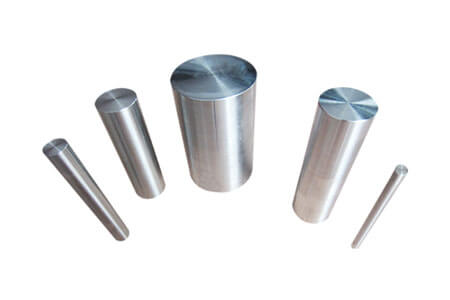
Hastelloy B2 is a nickel molybdenum alloy with lower carbon content compared to Hastelloy B, exhibiting excellent resistance to hydrochloric acid, aluminum chloride catalysts, and other strong reducing chemicals. Hastelloy B2 is suitable for most chemical process applications in the welded state. Equipment that is very suitable for handling various concentrations and temperatures of hydrochloric acid. Resistant to hydrogen aluminide gas and sulfuric acid, acetic acid, and phosphoric acid.
The main high-temperature use of Hastelloy B2 is for applications that require low thermal expansion coefficients. Exposure to temperatures ranging from 540 to 815 ° C (1000 to 1500 ° F) should be avoided, as the ductility of the alloy will decrease. In oxidizing gases such as air, Hastelloy B2 can be used at temperatures up to 540 ℃ (1000 ℉). In reducing gas or vacuum, alloys can be used at temperatures ranging from 815 ° C (1500 ° F) to higher. When yanic acid comes into contact with iron or copper, it may produce iron or copper salts, so Hastelloy B2 should not be used with copper or iron pipes in systems containing hydrochloric acid.
Corresponding brand:
| national standard | American Standard | din |
| NS3202 | N10665 | 2.4617 |
| NS322 | Hastelloy B-2 | 1744 |
| 00Mo28Ni65Fe2 | NiMo28 | |
| Nimofer6928 |
Chemical composition:
| % | C | Cr | Fe | Mn | S | Mo | Ni |
| Min | 0.02 | ≤1.0 | ≤2.0 | ≤1.0 | ≤0.1 | 26 | Remainder |
| Max | - | - | - | - | - | 30 | - |
Physical performance:
| density | melting point | tensile strength | yield strength | Elongation rate |
| 9.217g/cm3 | 1330~1380℃ | RmN/mm2690 | RP0.2N/mm2310 | A5 %40 |
Application field:
Mainly used for containers, container liners, pipelines, towers, valves, pumps, etc. that are resistant to HCl, H2SO4, H3PO4, HCOOH, etc. For equipment that uses welded components and cannot undergo solid solution treatment, it is advisable to choose some alloys.
